Lithium Cardiac Toxicity
Effects of Toxic Lithium Levels on ECG—Findings from the
LiSIE Retrospective Cohort Study (PMID: 36233807)
Lithium intoxication, defined by serum lithium levels ≥1.5 mmol/L, can lead to significant ECG changes. The most common alterations include QTc prolongation, observed in 24% of cases, and T-wave inversion, noted in 42%, while bradycardia occurs less frequently.
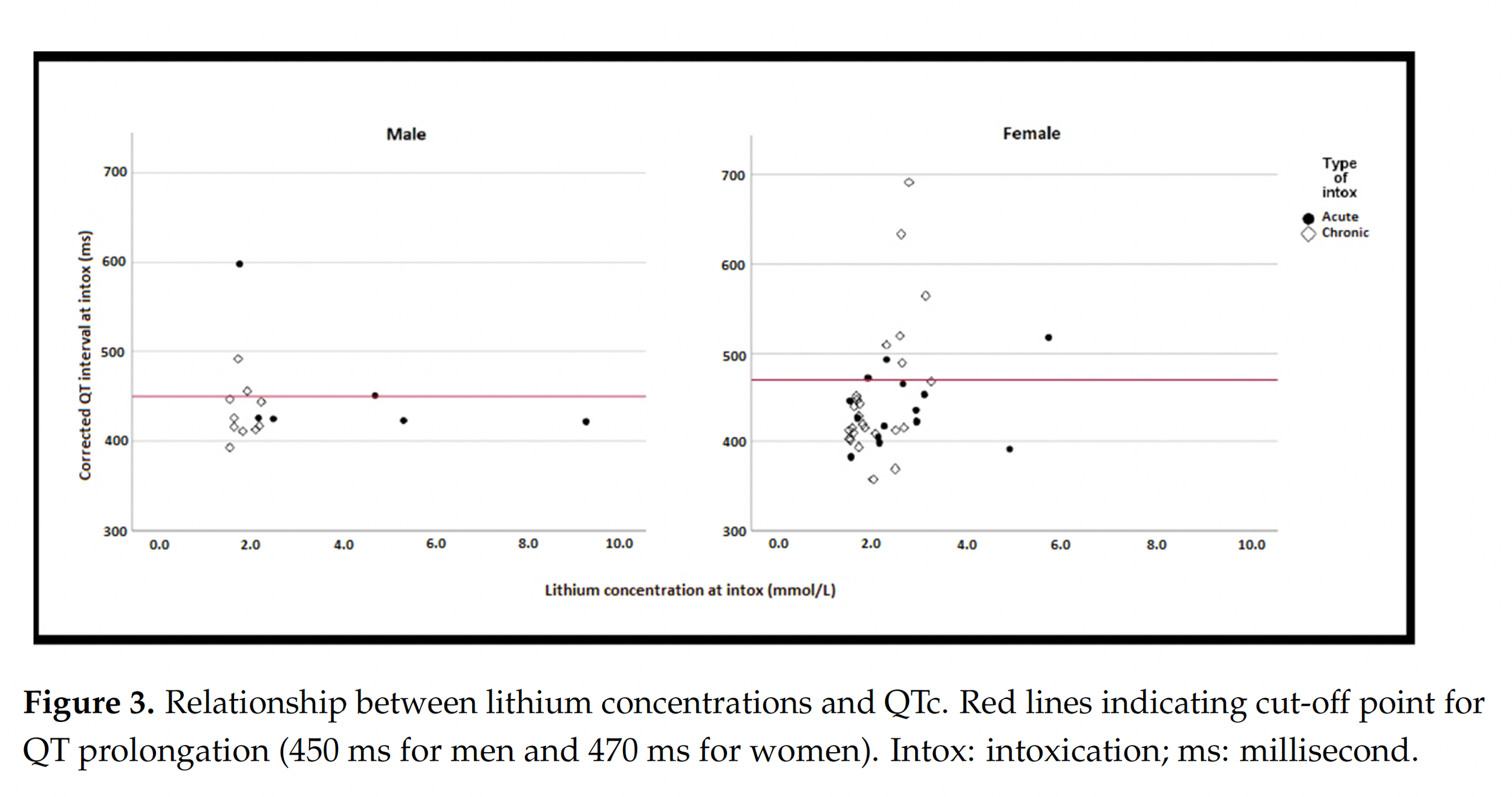
Interestingly, QTc prolongation has a weak correlation with serum lithium concentration (figure 3) (ρ = 0.329, p = 0.014) ).
Chronic lithium intoxications are more likely to result in significant QTc prolongation compared to acute cases, likely due to higher intracellular lithium accumulation, especially in patients with renal impairment (figure 3).
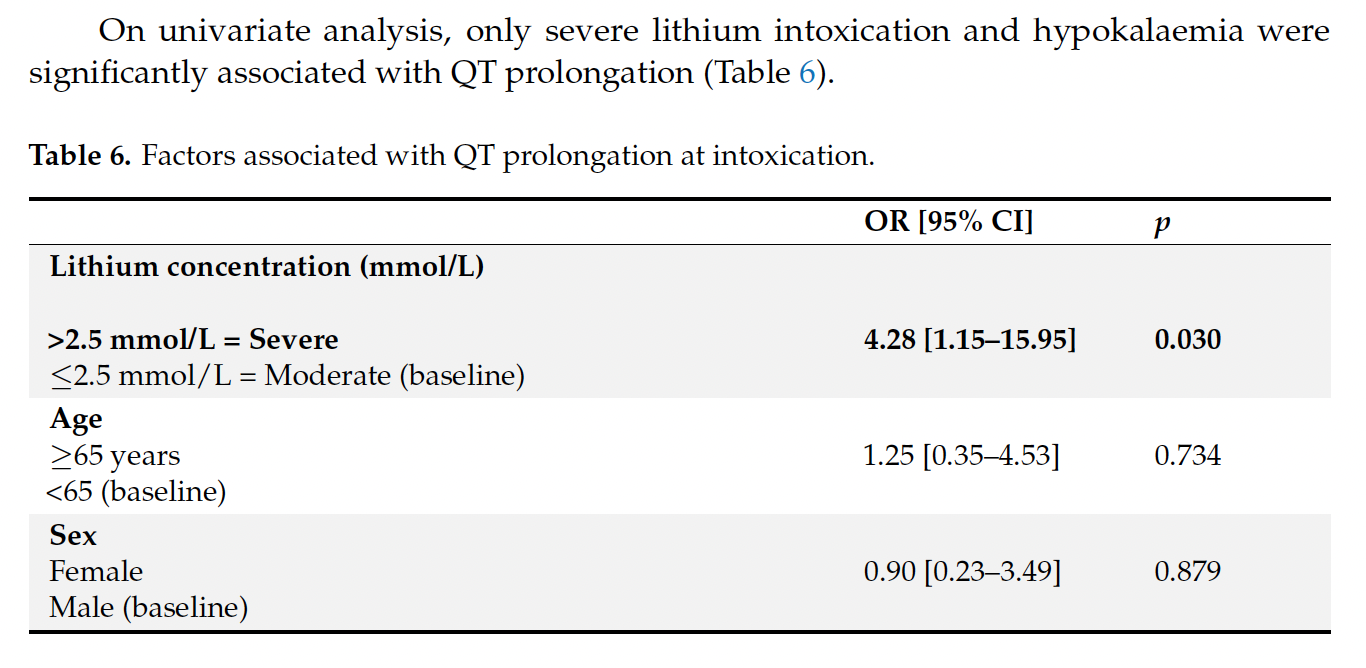
Severe lithium toxicity (>2.5 mmol/L) and hypokalaemia are the only factors significantly linked to QT prolongation, underscoring the necessity of monitoring and correcting serum potassium levels.
Cardiovascular comorbidities were present in over half of the episodes, with 24% of patients on anti-arrhythmic medications, highlighting a high-risk group where additional risk factors for arrhythmia must be assessed.
While concomitant medications known to affect QT prolongation did not show a statistically significant association with QTc changes in this cohort, they may still have additive effects that warrant clinical consideration.
Given the potential for severe, life-threatening QTc prolongation—especially during severe or chronic intoxications—it's essential for all patients presenting with lithium intoxication to undergo ECG monitoring and serial evaluations during treatment.