 EMBLLM
This evidence-based article examines emergency management of avalanche burial victims. The literature establishes that asphyxiation represents the predominant cause of death in avalanche burial (65–100%), while trauma and hypothermia account for smaller percentages of fatalities.
Survival outcomes correlate directly with burial timeframe and airway accessibility. Patients buried under 15 minutes show exceptional survival rates exceeding 90%, with outcomes declining substantially after 35–45 minutes and approaching zero beyond 60 minutes when airways are compromised.
Triage Recommendations
Critical triage recommendations include measuring core temperature (preferably esophageal) for victims buried longer than one hour without vital signs. The presence of an air pocket during burial significantly improves survival probability, particularly in extended burial scenarios.
Treatment Protocols
Treatment protocols stress initiating advanced cardiac monitoring promptly, performing trauma assessments aligned with standard guidelines, and considering extracorporeal life support (ECLS) rewarming for hypothermic cardiac arrest using prognostic scoring tools like the HOPE score.
Severe trauma — including head, thoracic, spinal, and pelvic injuries — commonly occurs alongside burial and warrants comprehensive trauma management alongside rewarming efforts.
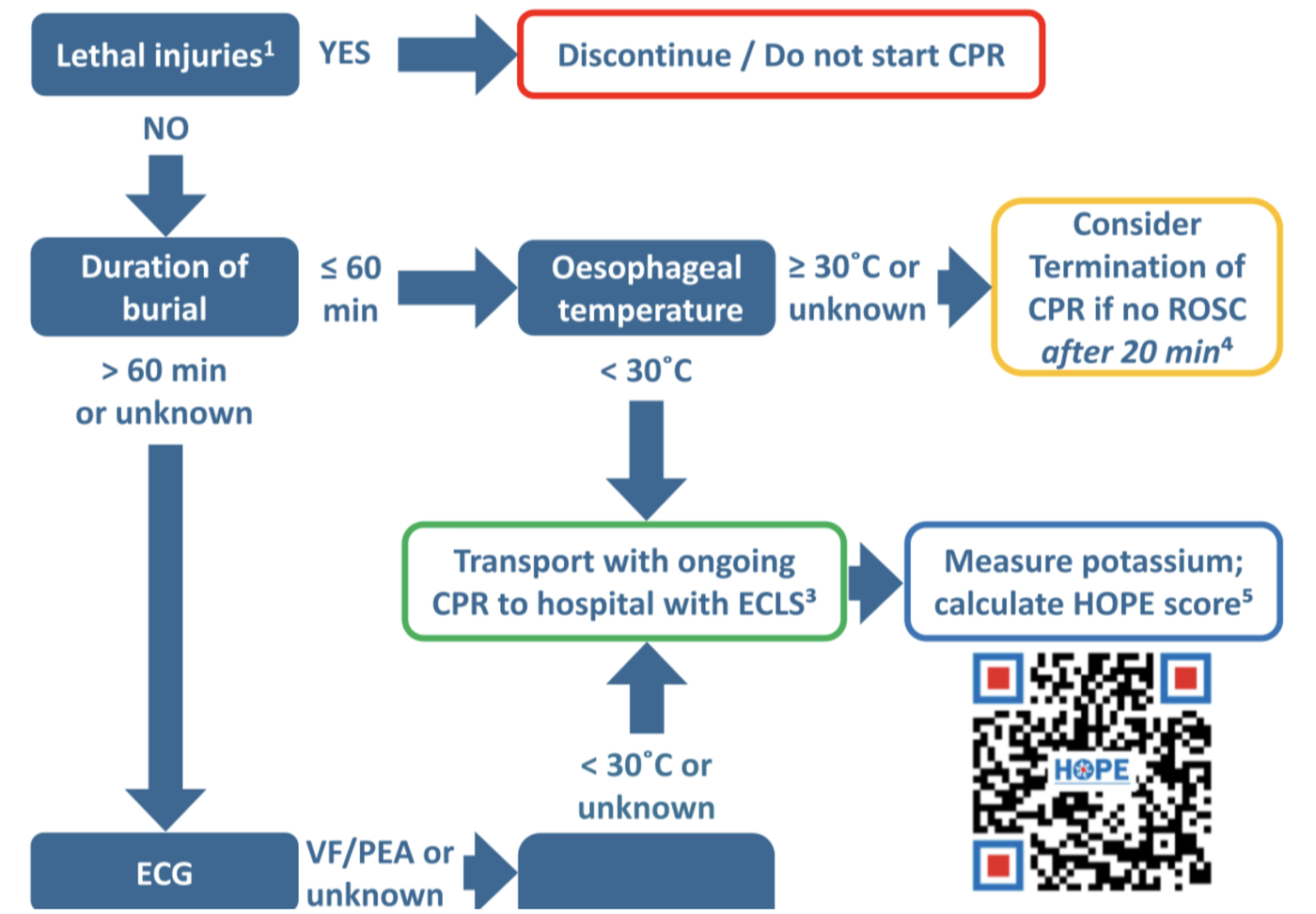
Source discussed: Resuscitation journal.