 EMBLLM
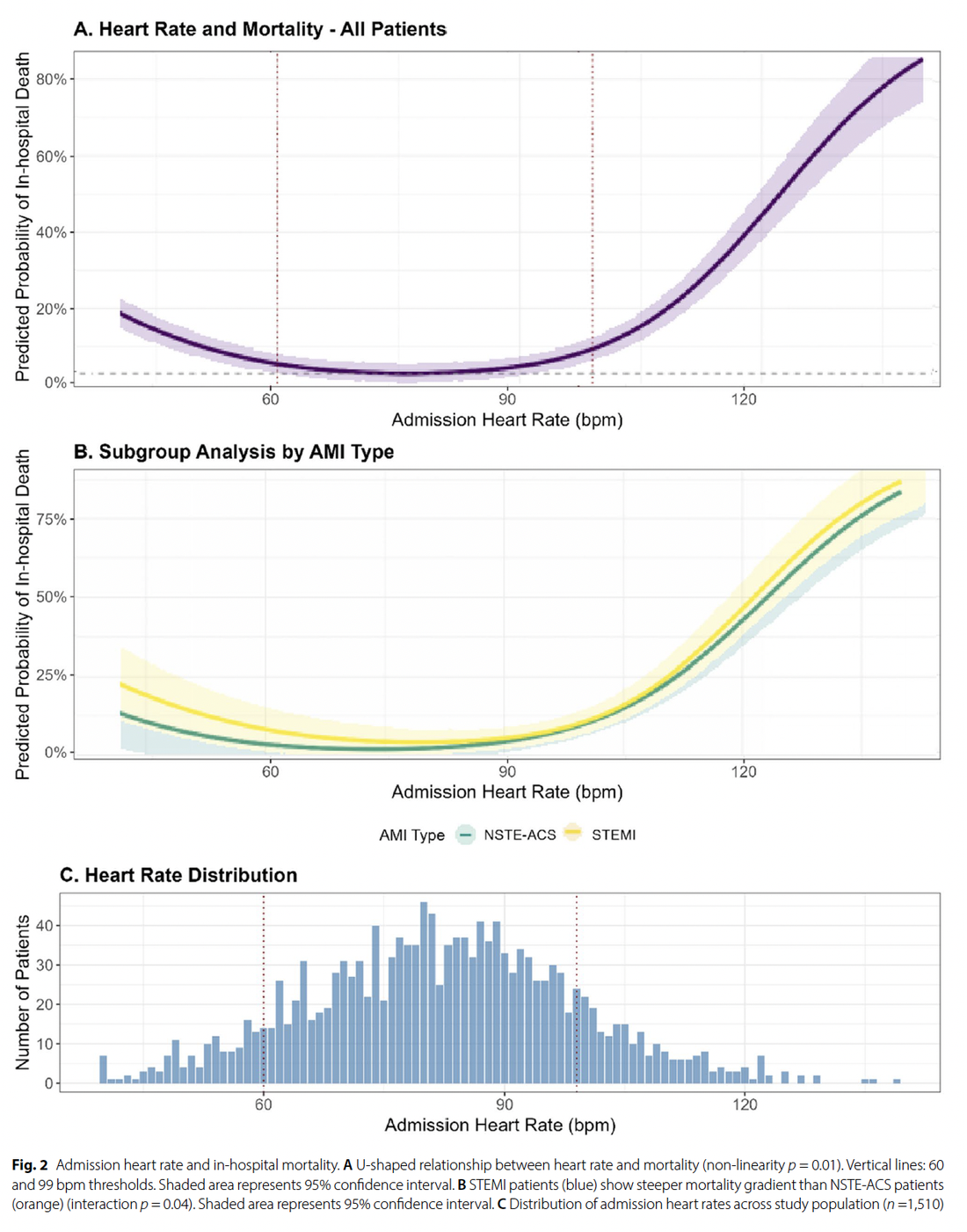
This analysis reveals that admission heart rate demonstrates a U-shaped relationship with in-hospital mortality in patients with acute myocardial infarction (AMI). Both abnormally low rates (<60 bpm) and elevated rates (≥100 bpm) present substantially higher mortality risk compared to normal ranges (60–99 bpm).
After adjusting for multiple variables including age, sex, Killip class, blood pressure, therapy type, comorbidities, and lab results, the data showed a heart rate below 60 bpm was associated with a 58% higher odds (aOR 1.58, 95% CI 1.02–2.45) and a heart rate at or above 100 bpm with a 145% higher odds (aOR 2.45, 95% CI 1.56–3.85) of in-hospital death.
Subgroup Findings
The relationship remained consistent across sensitivity analyses. STEMI patients demonstrated a more pronounced effect, particularly those presenting with tachycardia, while NSTE-ACS patients showed greater bradycardia impact.
Optimal heart rate nadirs differed by subtype — approximately 78 bpm for STEMI and 72 bpm for NSTE-ACS. Age, sex, hypertension status, and early beta-blocker use showed no significant effect modification.
Clinical Takeaway
Patients presenting outside the 60–99 bpm range may warrant prompt hemodynamic stabilization and closer monitoring, though prospective research is needed to confirm whether targeted normalization improves outcomes.
Source discussed: MIMIC-III cohort analysis.