 EMBLLM
Bleeding remains the most significant and frequent complication of oral anticoagulant (OAC) therapy, with real consequences for patient outcomes and thromboembolic risk.
Direct oral anticoagulants (DOACs) provide better intracranial bleeding protection than vitamin K antagonists (VKAs), but may increase gastrointestinal bleeding risk. Combination antithrombotic therapy compounds bleeding hazards, necessitating careful patient selection and regular reassessment using validated scoring tools like HAS-BLED and PRECISE-HBR.
Critical Bleeding
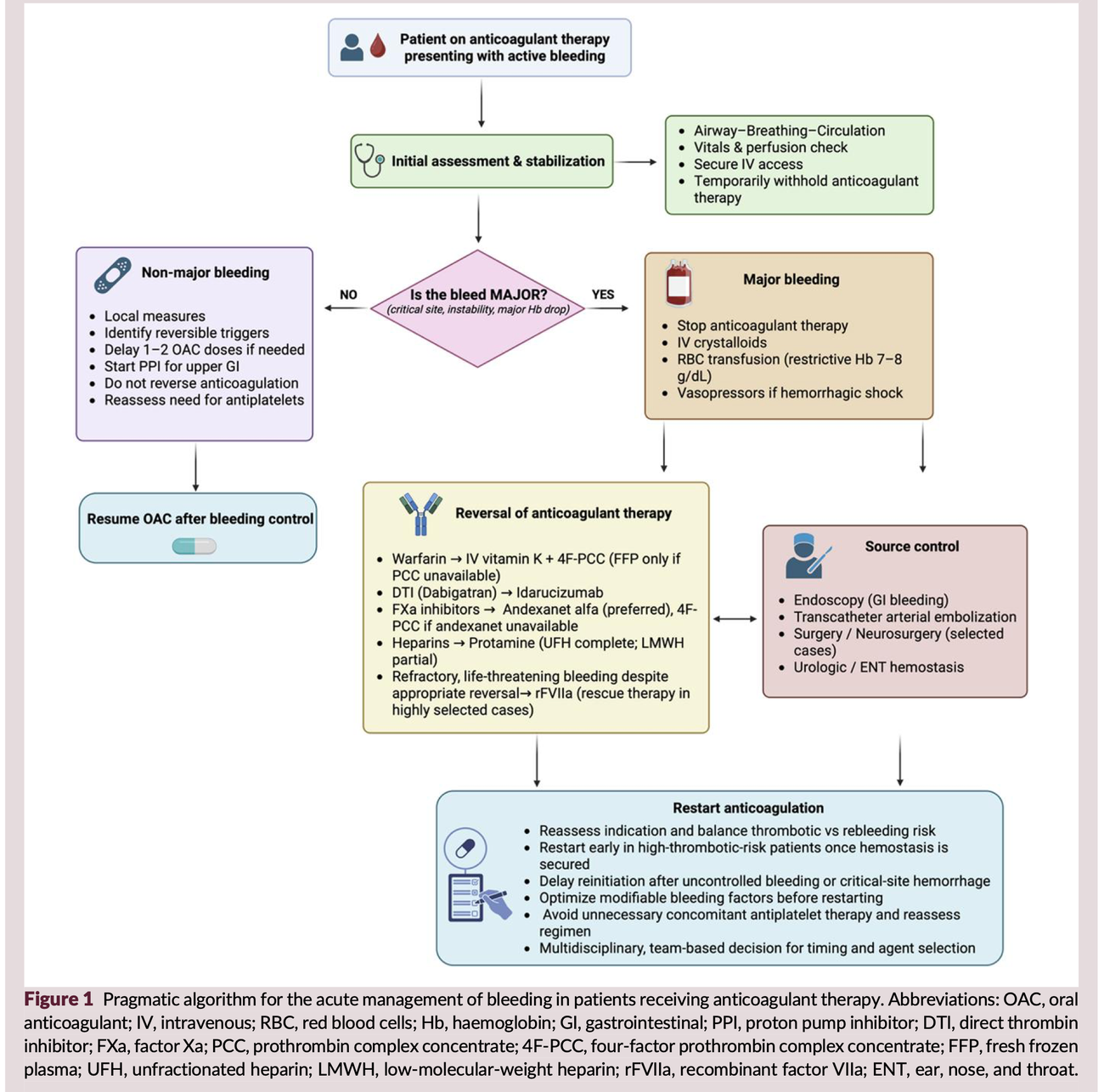
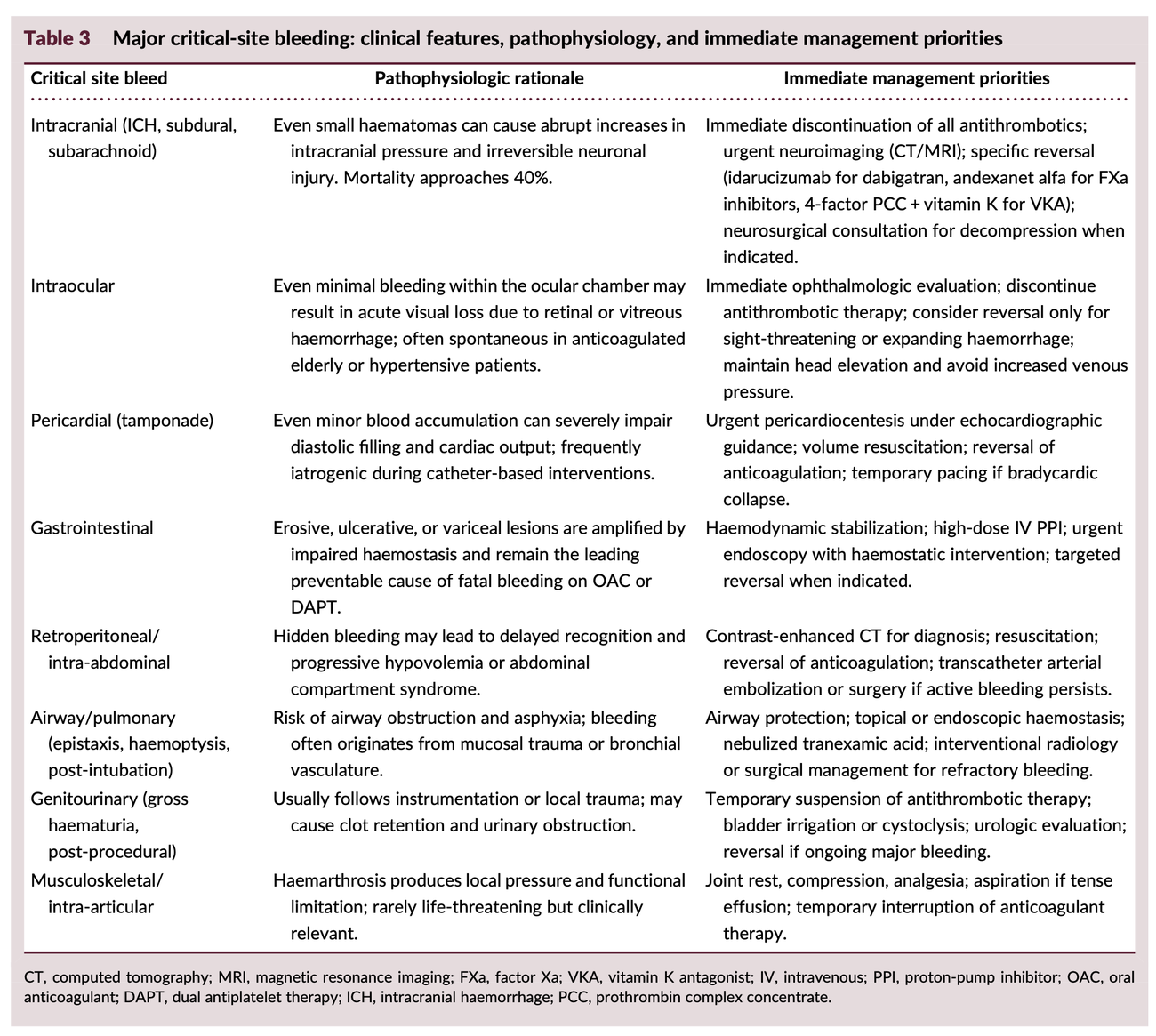
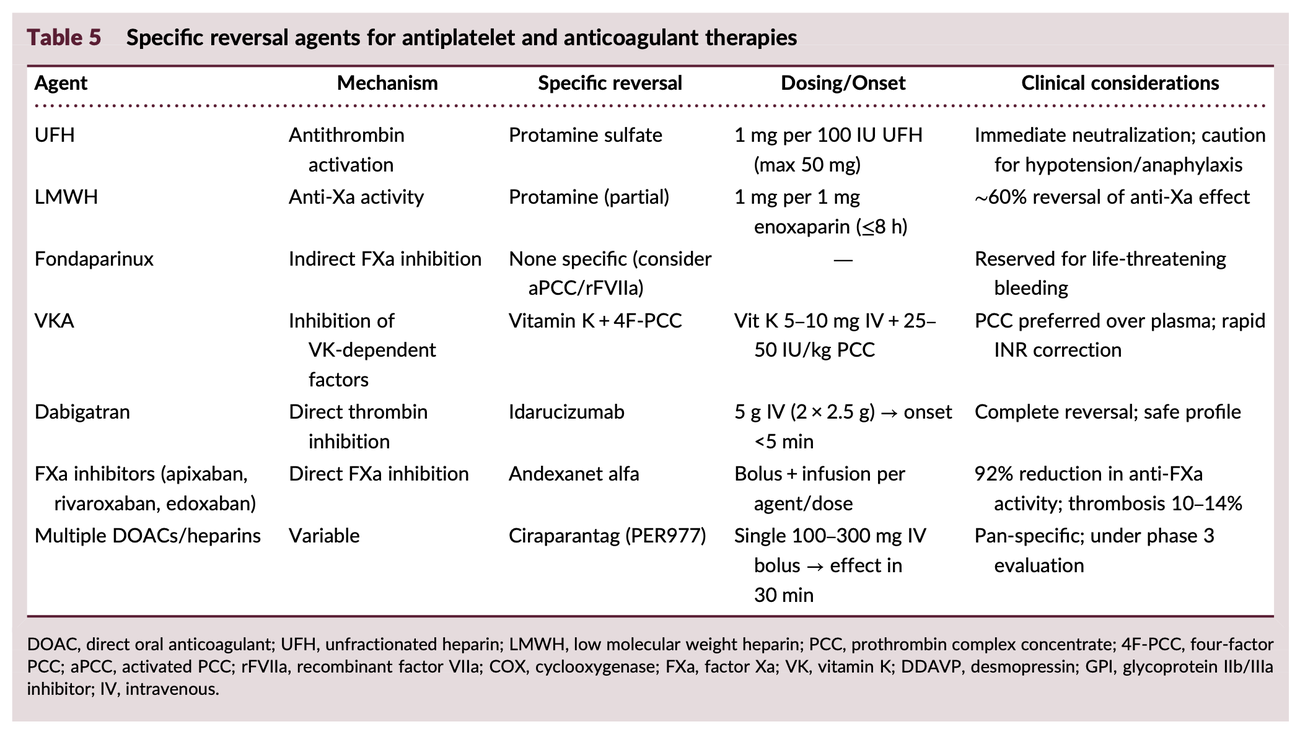
For situations involving hemodynamic instability or critical anatomical sites, the recommended approach is urgent stabilization, antithrombotic discontinuation, targeted resuscitation, and drug-specific reversal agents: idarucizumab for dabigatran; andexanet alfa or PCC for FXa inhibitors; and vitamin K plus PCC for VKAs.
Multidisciplinary involvement matters, and restarting anticoagulation after major bleeding — once hemostasis is achieved — should be prioritized, balancing thrombotic versus bleeding risk with potential dose adjustments.
Minor Bleeding
Minor bleeding typically requires supportive care rather than therapy cessation.
Source discussed: management of bleeding on anticoagulant therapy.